Industrial Network Topologies with Siemens SCALANCE Switches: A Comprehensive Guide
9/4/2025

Introduction
Industrial Ethernet networks form the backbone of modern automation systems, connecting critical devices and equipment in manufacturing plants, process industries, and infrastructure facilities. Siemens SCALANCE switches represent a comprehensive portfolio of industrial Ethernet switching solutions designed to support various network topologies while delivering exceptional reliability, performance, and security in harsh industrial environments.
This article explores the different types of industrial network topologies that can be implemented using Siemens SCALANCE switches, examining their benefits, drawbacks, and practical applications to help you make informed decisions for your industrial networking requirements.
Understanding SCALANCE Switch Portfolio
SCALANCE Product Lines Overview
Siemens offers a diverse range of SCALANCE switches, each optimised for specific industrial applications:
SCALANCE X-000 Series (Unmanaged)
Entry-level switches for simple machine networking
10/100 Mbps transmission rates
Compact design with up to 5 ports
Cost-effective solution for small networks
SCALANCE X-100 Series (Unmanaged)
Rugged switches with higher port density (up to 24 ports)
Redundant power supply capabilities
Available in electrical and optical configurations
Suitable for machine-level applications
SCALANCE X-200 Series (Managed)
Layer 2 managed switches with advanced functionality
Support for ring redundancy with 200ms failover time
PROFINET and EtherNet/IP compatibility
Configuration and diagnostics integration
SCALANCE X-300 Series (Managed)
High-performance Gigabit switches
Support for complex network topologies
Fast media redundancy (200ms failover)
Optical and electrical connectivity options
SCALANCE X-400 Series (Modular)
Maximum flexibility with modular architecture
Up to 26 nodes per star point connectivity
0.3-second failover time for redundant rings
Ideal for process control systems
SCALANCE X-500 Series (19" Rack)
Enterprise-grade switches for backbone networks
Up to 10 Gbps transmission rates
Complete freedom in connection with media selection
Advanced Layer 2/3 functionality
Industrial Network Topologies with SCALANCE Switches
1. Star Topology
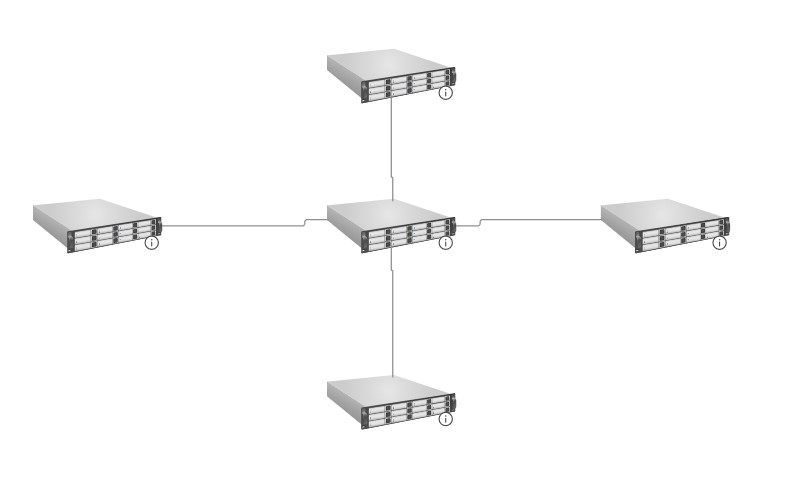
Architecture Overview
Star topology represents the most fundamental network architecture where a central SCALANCE switch connects multiple devices or network segments in a hub-and-spoke configuration.
Implementation with SCALANCE Switches
SCALANCE X-400 switches: Can interconnect up to 26 nodes or subnets per star point
SCALANCE X-300 series: Ideal for departmental or area-level star configurations
SCALANCE X-200 series: Perfect for machine-level star implementations
Benefits of Star Topology
Centralised Management: Single point of configuration and monitoring
Easy Troubleshooting: Fault isolation is straightforward with a centralised architecture
High Scalability: Additional devices can be easily connected to available ports
Performance Optimisation: Each connected device gets dedicated bandwidth
Flexible Expansion: Network growth is simple and cost-effective
Drawbacks of Star Topology
Single Point of Failure: Central switch failure affects the entire network segment
Cable Requirements: Requires individual cable runs to each device
Distance Limitations: Limited by the maximum cable length from the central switch
Potential Bottleneck: The Central switch can become a performance bottleneck under heavy load
Best Applications
Machine-level networking within manufacturing cells
Office integration points
Small to medium-sized production areas
Testing and commissioning environments
2. Ring Topology
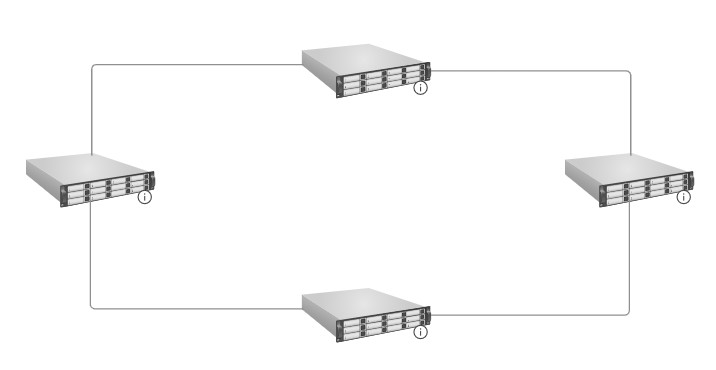
Architecture Overview
Ring topology creates a closed-loop network where SCALANCE switches are connected in a circular configuration, providing built-in redundancy and high availability.
Implementation with SCALANCE Switches
Ring topologies leverage SCALANCE's advanced redundancy features:
Media Redundancy Protocol (MRP): Ensures rapid fault recovery
Fast Media Redundancy: 200ms failover time for most SCALANCE series
Ultra-Fast Recovery: 0.3-second failover with SCALANCE X-400 series
Cascaded Rings: Up to 50 SCALANCE switches can be connected in a single ring
Types of Ring Implementations
Electrical Rings
Copper-based connections using RJ45 ports
Cost-effective for shorter distances
Suitable for control cabinet installations
Optical Rings
Fibre optic connections for extended distances
Immune to electromagnetic interference
Ideal for harsh industrial environments
Support for distances up to 1,300 km with single-mode fibre
Mixed Electrical/Optical Rings
A combination of copper and fibre connections
Flexibility in network design and installation
Optimised cost-performance balance
Benefits of Ring Topology
High Availability: Automatic failover ensures network continuity
Fault Tolerance: Single link or switch failure doesn't interrupt network operation
Extended Distance: Optical rings support very long network spans
Deterministic Recovery: Predictable failover times for critical applications
Cost-Effective Redundancy: Built-in redundancy without duplicate infrastructure
Drawbacks of Ring Topology
Complex Configuration: Requires proper setup of redundancy protocols
Higher Initial Cost: More expensive than simple linear topologies
Bandwidth Sharing: Network bandwidth is shared among all ring participants
Troubleshooting Complexity: Fault diagnosis can be more challenging
Reconfiguration Impact: Network changes may require careful planning
Best Applications
Critical production lines require high availability
Plant-wide backbone networks
Process control systems
Hazardous area installations
Long-distance facility connections
3. Line Topology
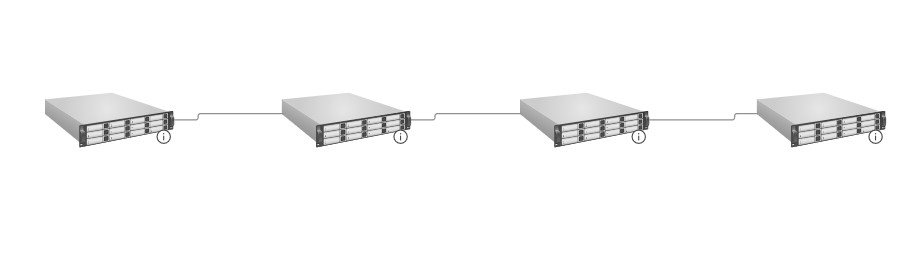
Architecture Overview
Line topology, also known as daisy-chain or linear bus topology, sequentially connects SCALANCE switches, creating a simple and cost-effective network structure.
Implementation with SCALANCE Switches
SCALANCE X-000 series: Ideal for simple machine connections
SCALANCE X-100 series: Suitable for extended line topologies
SCALANCE X-200/300 series: Support for managed line networks with advanced features
Benefits of Line Topology
Simple Design: Easy to understand and implement
Cost-Effective: Minimal cabling requirements
Easy Extension: New devices can be added at the end of the line
Flexible Installation: Follows natural equipment layout
Low Maintenance: Simple troubleshooting and maintenance procedures
Drawbacks of Line Topology
Single Point of Failure: A Break in any link affects downstream devices
Limited Scalability: Performance degrades with network length
No Redundancy: No backup path in case of link failure
Distance Constraints: Limited by cumulative cable lengths
Bandwidth Bottlenecks: Shared bandwidth across the entire line
Best Applications
Temporary installations
Simple machine-level networking
Linear production processes
Cost-sensitive applications
Small-scale operations
4. Hybrid Topologies
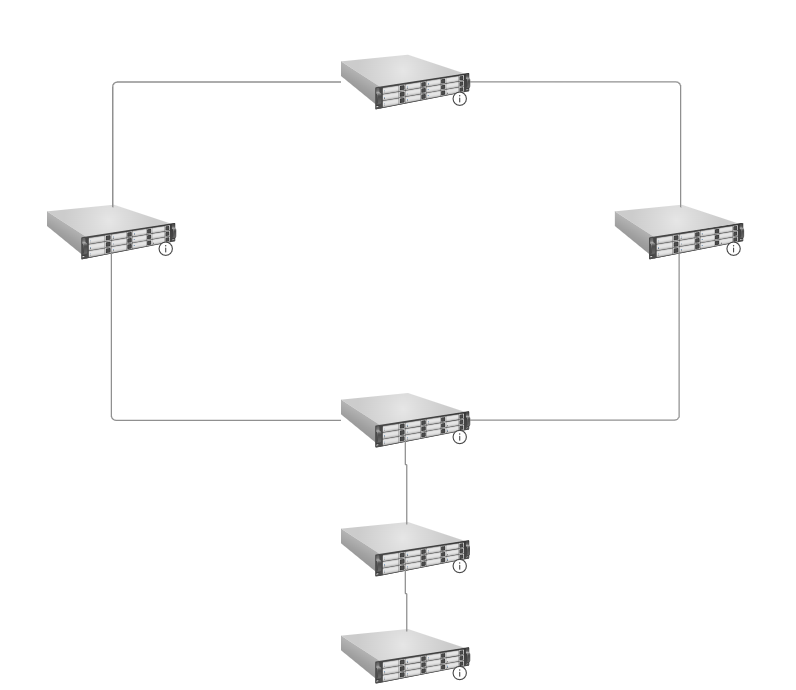
Architecture Overview
Hybrid topologies combine multiple topology types to create optimised network architectures that leverage the benefits of different approaches while mitigating their individual limitations.
Common Hybrid Implementations
Star-Ring Hybrid
Central backbone ring with star-connected subnets
Combines the high availability of rings with the flexibility of stars
Optimal for large manufacturing facilities
Hierarchical Network Design
Multiple topology layers (star at machine level, ring at plant level)
Scalable architecture supporting network growth
Clear segregation of network segments
Redundant Star Configuration
Dual central switches with failover capabilities
Eliminates a single point of failure in a star topology
Enhanced reliability for critical applications
Benefits of Hybrid Topologies
Optimised Performance: Best-fit topology for each network segment
Enhanced Reliability: Multiple redundancy levels
Scalable Design: Supports network growth and evolution
Cost Optimisation: Right-sized solutions for different areas
Flexible Architecture: Adaptable to changing requirements
Drawbacks of Hybrid Topologies
Design Complexity: Requires advanced network planning
Higher Management Overhead: More complex configuration and monitoring
Increased Costs: Multiple switch types and redundancy levels
Troubleshooting Challenges: Complex fault isolation procedures
Skills Requirements: Demands higher technical expertise
Advanced SCALANCE Features for Network Optimisation
PROFINET Integration
SCALANCE switches provide seamless integration with PROFINET networks, supporting:
Real-time communication requirements
Integrated system diagnostics
Configuration in Run (CiR) capabilities
Device-level redundancy (S2 devices)
Security Features
Industrial cybersecurity is enhanced through:
VLAN support for network segmentation
IEEE 802.1X authentication
SSH and SSL-encrypted communications
Access control lists and port security
Power over Ethernet (PoE)
Selected SCALANCE models support PoE functionality:
Power budget up to 240W
Support for IEEE 802.3at and 802.3bt standards
Simplified installation for IP cameras and wireless access points
Reduced cabling requirements
Network Management and Diagnostics
SNMP support for network monitoring
Web-based management interfaces
Integration with SINEC NMS
LED diagnostics and status indication
Automatic email notifications for fault conditions
Topology Selection Guide
Factors to Consider
Network Size and Complexity
Small networks (< 10 devices): Star or Line topology
Medium networks (10-50 devices): Ring or Hybrid topology
Large networks (> 50 devices): Hierarchical Hybrid topology
Availability Requirements
Standard availability: Star or Line topology
High availability: Ring topology
Mission-critical: Redundant Ring or Hybrid topology
Environmental Conditions
Harsh environments: Optical ring topology
Standard industrial: Mixed electrical/optical
Office environments: Electrical star topology
Budget Constraints
Limited budget: Line or simple Star topology
Moderate budget: Ring topology
High budget: Hybrid topology with full redundancy
Distance Requirements
Short distances (< 100m): Electrical connections
Medium distances (100m-2km): Multi-mode fibre
Long distances (> 2km): Single-mode fibre
Implementation Best Practices
Network Planning
Conduct thorough site surveys to understand physical constraints and requirements
Define availability requirements based on production criticality
Plan for future expansion by selecting switches with adequate port capacity
Consider environmental factors when selecting switch models and connection types
Configuration Guidelines
Implement proper VLAN segmentation to optimise network performance and security
Configure redundancy protocols according to manufacturer recommendations
Set up comprehensive monitoring using SNMP and web-based management
Document network topology and maintain updated configuration records
Maintenance Recommendations
Regular firmware updates to ensure security and performance
Periodic cable and connection inspections in harsh environments
Monitor network performance using built-in diagnostics tools
Maintain spare units for critical network segments
Conclusion
Siemens SCALANCE switches provide a comprehensive platform for implementing robust industrial network topologies that meet the demanding requirements of modern automation systems. The choice between star, ring, line, or hybrid topologies depends on specific application requirements, including availability needs, budget constraints, environmental conditions, and scalability requirements.
By understanding the benefits and limitations of each topology type and leveraging the advanced features of SCALANCE switches, industrial network designers can create optimised networking solutions that deliver reliable, secure, and high-performance connectivity for critical industrial applications.
The modular design and comprehensive feature set of the SCALANCE portfolio ensure that, regardless of the chosen topology, organisations can build networks that not only meet today's requirements but also provide a foundation for future growth and technological evolution in the industrial automation landscape.


