The Siemens SIMATIC S7-1200 G2: Revolutionizing Basic Automation with Next-Generation Performance
6/22/2025

The Siemens SIMATIC S7-1200 G2 represents a significant evolution in programmable logic controller (PLC) technology, marking the first major update to the popular S7-1200 series in over a decade. As industrial automation demands continue to grow more complex while requiring greater efficiency and reliability, the S7-1200 G2 emerges as Siemens' answer to these evolving needs. This next-generation controller builds upon the proven foundation of its predecessor while introducing substantial improvements in processing power, memory capacity, motion control capabilities, and connectivity features.
Enhanced Performance and Processing Power
Dramatic Speed Improvements
The S7-1200 G2 delivers exceptional performance improvements over its predecessor, with processing speeds that are twice as fast as the original S7-1200 [4]. The new controller features 40-nanosecond bit processing, representing a significant leap in computational capability. This enhanced processing power enables the handling of more complex automation tasks while maintaining the precise and reliable execution of control logic that industrial applications demand.
Expanded Memory Capacity
One of the most notable improvements in the S7-1200 G2 is its substantially increased memory capacity. The controller now offers up to 750 kilobytes of data memory, which is double the capacity of its predecessor. Even the smallest CPU variant, the 1212C, now provides 500 kilobytes of combined data memory and 150 kilobytes of program memory, totalling 650 kilobytes – more than the largest S7-1200 G1 CPU. The 1214C model offers even more impressive specifications with 250 kilobytes of program memory and 750 kilobytes of data memory.
Advanced Motion Control Capabilities
Multi-Axis Coordination and Kinematics
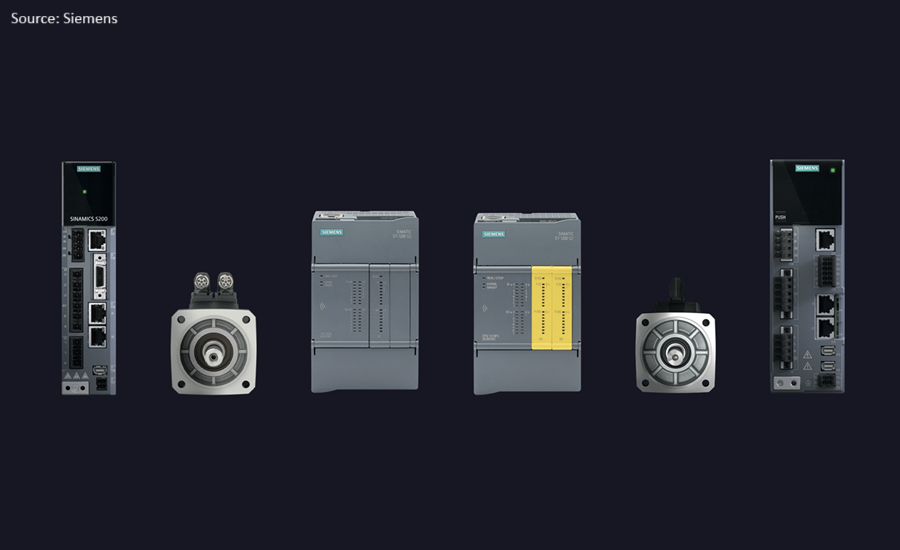
The S7-1200 G2 introduces sophisticated motion control features that were previously available only in higher-end controllers like the S7-1500 series. The new generation supports coordinated axis movement, synchronised motion, and simple kinematics, opening up new possibilities for automation applications. Users can now control up to four positioning axes or five synchronised axes, making the G2 ideal for applications such as packaging machines and basic robotics.
Technology Objects Support
The S7-1200 G2 supports advanced Technology Objects (TOs) based on SIMATIC Motion Library Version 8.0, including TO_SpeedAxis, TO_PositioningAxis, TO_SynchronousAxis, TO_ExternalEncoder, TO_OutputCam, TO_CamTrack, TO_MeasuringInput, TO_Cam, and TO_Kinematics. This comprehensive motion control functionality enables precise control of motors and actuators across a wide range of industrial applications.
Compact Design and Space Optimisation
Reduced Footprint
The S7-1200 G2 achieves a remarkable 25% reduction in footprint compared to its predecessor while maintaining all essential functionality. This space-saving design is particularly valuable in control panels where real estate is at a premium. The compact form factor extends to the expansion modules as well, with 8/16 channel SM modules saving 33% of DIN rail space and F-SM modules saving 57%.
Improved Physical Layout
The updated physical design features several user-friendly improvements, including power entry relocated to the bottom and communication ports moved to the top side. The improved LED layout provides enhanced I/O point diagnostics, while push-in terminals eliminate the need for screwdrivers during installation, significantly reducing wiring time.
Enhanced Communication and Connectivity
Dual Ethernet Ports
All S7-1200 G2 CPU models now feature dual Ethernet ports with integrated switching capability, providing greater flexibility in network topology and redundancy options. This enhancement supports daisy-chaining configurations without requiring additional network switches, simplifying installation and reducing costs.
PROFINET RT and IRT Support
The S7-1200 G2 introduces support for both Real-Time PROFINET (RT) and Isochronous Real-Time PROFINET (IRT) communication. While the original S7-1200 supported only PROFINET RT, the G2's IRT capability enables synchronisation of devices with very high accuracy, achieving communication cycle times as low as 31.25 microseconds with just 1 microsecond of jitter [18]. This makes the controller particularly suitable for time-critical applications requiring precise multi-axis motion control.
The controller can now connect up to 31 PROFINET devices, providing substantial scalability for distributed I/O applications.
Near Field Communication (NFC)
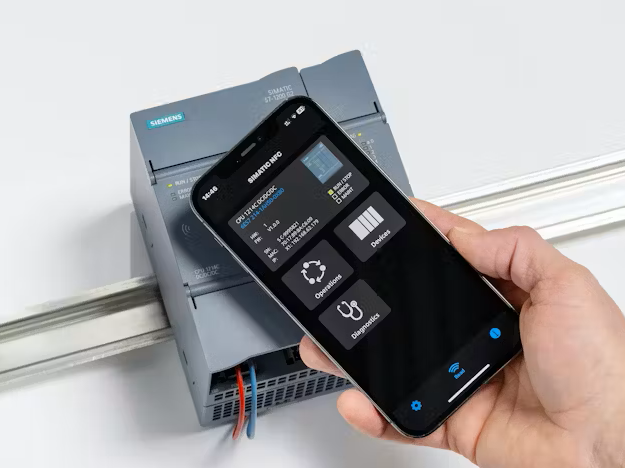
A revolutionary diagnostic feature of the S7-1200 G2 is its integrated Near Field Communication (NFC) capability. Technicians can access diagnostic and operational data wirelessly using a smartphone app, even when the controller is powered off. This feature significantly reduces troubleshooting time by providing instant access to critical system information without requiring physical connections.
Flexible Machine Safety Integration
Failsafe CPU Variants
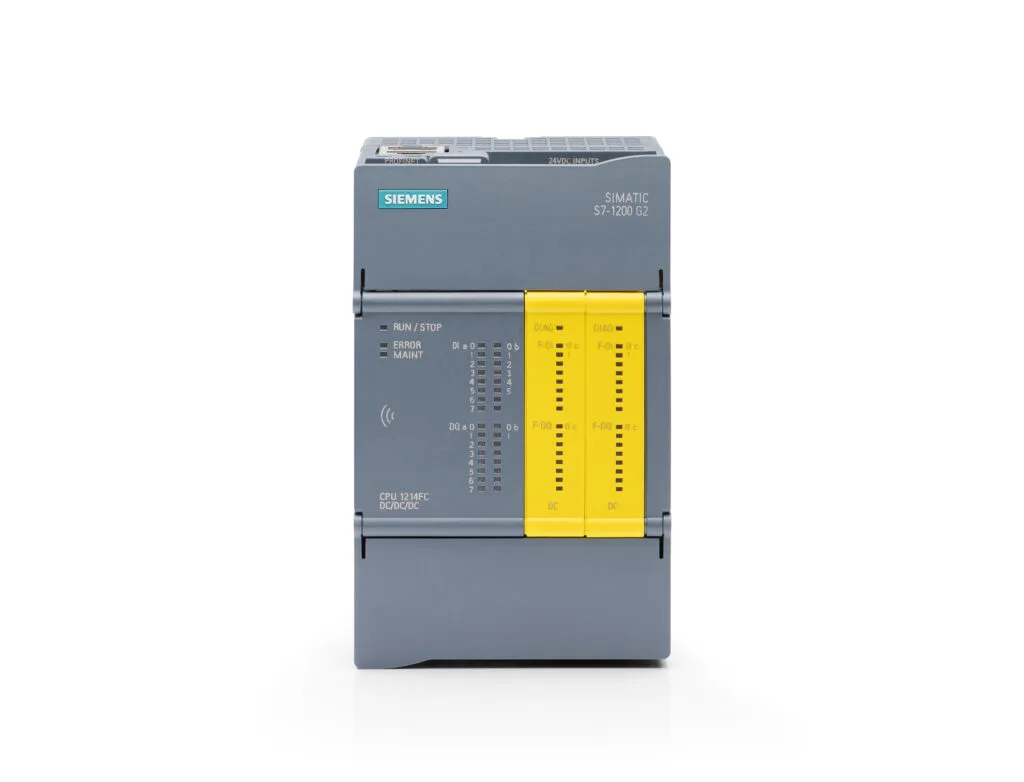
The S7-1200 G2 offers integrated failsafe CPU variants (CPU 1212FC and CPU 1214FC) that eliminate the need for separate safety hardware in many applications [4][6]. These controllers are certified for applications up to Safety Integrity Level 3 (SIL 3) and Performance Level e (PL e), suitable for high-demand safety applications.
Simplified Safety Programming
Starting with TIA Portal V20, safety programming is included in STEP 7 Basic without requiring a separate license, making safety automation more accessible than ever. This integration allows users to program both standard and safety functions within a single engineering environment, reducing complexity and development time.
Expanded Safety I/O Options
The G2 generation features an optimised fail-safe hardware portfolio, including fail-safe signal boards that can be installed directly on the CPU. This modular approach allows flexible expansion of fail-safe I/O according to the specific requirements of safety functions and safety modes.
Enhanced Security Features
Cybersecurity Improvements
The S7-1200 G2 incorporates enhanced security measures, including IEC 62443-4-2 certification for cybersecurity. Built-in security measures protect against unauthorised access, addressing the growing concerns about industrial cybersecurity. These improvements are particularly important given historical vulnerabilities identified in earlier PLC generations.
Secure Communication
The controller supports secure communication protocols and enhanced authentication mechanisms, providing multiple layers of protection for industrial networks. Transport Layer Security (TLS) support ensures encrypted communication channels for sensitive data transmission.
Programming and Engineering Benefits
TIA Portal Integration
The S7-1200 G2 is fully integrated with Siemens' TIA Portal (Totally Integrated Automation), providing a unified engineering environment for programming, configuration, and diagnostics. This integration supports multiple programming languages, including Ladder Logic (LAD), Function Block Diagram (FBD), and Structured Control Language (SCL).
Seamless Scalability
The controller provides seamless scalability across the SIMATIC controller portfolio, making it easier to migrate to higher-end controllers like the S7-1500 series when application requirements grow. The shared engineering platform and similar instruction sets facilitate smooth transitions between different controller generations.
Industrial Applications and Use Cases
Manufacturing and Production
The S7-1200 G2 excels in manufacturing applications, controlling production lines, machinery, and ensuring product quality. Its precision makes it ideal for processes requiring synchronised movements and coordinated operations. The enhanced motion control capabilities particularly benefit packaging, labelling, and assembly operations.
Process Automation
In process industries such as chemical processing and water treatment, the S7-1200 G2 monitors critical parameters including temperature, pressure, and flow rates while adjusting operations in real-time. The controller's ability to handle multiple input and output points makes it suitable for complex process control tasks.
Building Automation
The S7-1200 G2 manages building automation tasks including lighting systems, HVAC control, and energy consumption monitoring [26]. Its communication capabilities enable integration with other building management systems, creating smart and energy-efficient facilities.
New Features Exclusive to G2
The S7-1200 G2 introduces several features not available in the original generation:
- PROFINET IRT support for high-precision timing applications
- NFC functionality for wireless diagnostics
- Advanced motion control with multi-axis coordination
- Enhanced safety integration with simplified programming
- Improved cybersecurity with IEC 62443-4-2 certification
- Media Redundancy Protocol (MRP and MRPD) support
Backwards Compatibility Considerations
While the S7-1200 G2 supports S7-1200 functionality most, there are noted differences that users should consider during migration. The migration from G1 to G2 is generally straightforward due to shared programming environments and similar instruction sets.
Cost-Effectiveness and Return on Investment
Reduced Total Cost of Ownership
The S7-1200 G2 delivers excellent cost-effectiveness through its modular design, allowing users to purchase only the required components while maintaining upgrade flexibility. The elimination of separate safety hardware in many applications reduces both initial costs and complexity.
Productivity Improvements
Enhanced processing power and advanced motion control capabilities enable higher productivity levels while reducing the need for additional controllers or software. The simplified engineering environment and improved diagnostics reduce development time and maintenance costs.
Energy Efficiency
The controller incorporates energy-saving features and optimised power consumption, contributing to reduced operational costs and environmental impact. These efficiency improvements align with industry trends toward sustainable automation solutions.
Future-Proofing and Industry 4.0 Readiness
IoT Integration
The S7-1200 G2 supports integration with IoT platforms, enabling real-time data collection and analysis for Industry 4.0 initiatives. This connectivity facilitates predictive maintenance, energy optimisation, and enhanced decision-making capabilities.
Expandability and Flexibility
The controller's modular architecture and enhanced expansion capabilities ensure it can adapt to changing requirements over time. Support for up to 31 PROFINET devices provides substantial room for system growth.
Conclusion
The Siemens SIMATIC S7-1200 G2 represents a significant advancement in basic automation technology, delivering substantial improvements in performance, functionality, and connectivity while maintaining the cost-effectiveness and reliability that made its predecessor successful. With doubled processing speed, enhanced memory capacity, advanced motion control capabilities, and innovative features like NFC diagnostics, the G2 sets new standards for compact automation controllers.
The integration of sophisticated safety features, enhanced cybersecurity, and support for modern communication protocols positions the S7-1200 G2 as an ideal choice for organisations seeking to modernise their automation infrastructure while preparing for Industry 4.0 initiatives. Whether deployed in manufacturing, process control, or building automation applications, the S7-1200 G2 provides the performance, flexibility, and future-proofing capabilities needed to meet evolving industrial automation challenges.
For organisations in Syria looking to upgrade to the revolutionary Siemens SIMATIC S7-1200 G2, Zahabi Co stands ready to provide comprehensive migration support and technical assistance. With deep expertise in industrial automation systems and extensive experience with Siemens SIMATIC controllers, Zahabi Co. offers end-to-end migration services to ensure smooth transitions from legacy systems to the advanced S7-1200 G2 platform.


