Machine Safety and Integrated Safety in Siemens PLCs: A Comprehensive Guide for Industrial Automation
6/23/2025

Machine safety has become a critical cornerstone of modern industrial automation, requiring sophisticated control systems that can protect personnel while maintaining operational efficiency. Siemens has established itself as a leader in this field through its innovative SIMATIC Safety Integrated technology, which seamlessly combines standard automation with functional safety in a single platform.
Understanding Machine Safety Fundamentals
Machine safety in industrial automation encompasses the systematic approach to identifying, assessing, and mitigating risks associated with automated machinery and processes. The primary objective is to protect human life, prevent injuries, and safeguard equipment while ensuring compliance with international safety standards and regulations.
The foundation of effective machine safety lies in comprehensive risk assessment, which involves identifying potential hazards, evaluating their severity, and determining the frequency of human exposure to these risks. This systematic evaluation enables engineers to implement appropriate safety measures and select suitable protective systems that match the identified risk levels.
Key Safety Risks in Industrial Automation
Industrial automation environments present multiple categories of safety risks that must be carefully managed:
- Mechanical Hazards: Moving parts, rotating machinery, and crushing mechanisms that can cause severe injuries to personnel working in proximity to automated systems.
- Electrical Hazards: Short circuits, power surges, and electrical shock risks that may result from faulty wiring, component failures, or improper maintenance procedures.
- Process-Related Hazards: Chemical exposure, pressure vessel failures, and temperature-related risks that are inherent to specific industrial processes.
- Human Factor Risks: Operator errors, inadequate training, and failure to follow established safety procedures that can compromise system integrity.
SIMATIC Safety Integrated: Siemens' Comprehensive Solution
Siemens SIMATIC Safety Integrated represents a paradigm shift in machine safety design, offering seamless integration of safety technology into standard automation applications. This innovative approach eliminates the need for separate safety systems, resulting in significant cost savings, reduced engineering complexity, and improved system reliability.
Core Architecture and Design Principles
The SIMATIC Safety Integrated system operates on the principle of "one controller, one engineering, one communication for standard and fail-safe automation". This unified architecture provides several distinct advantages over traditional safety implementations:
- Integrated Processing: Safety functions are built directly into the PLC hardware and software, eliminating the need for additional safety relays or separate control systems.
- Unified Programming Environment: Both standard automation and safety logic are programmed within the same TIA Portal environment, reducing training requirements and simplifying system maintenance.
Common Communication Network: Safety-related data is transmitted over the same network infrastructure as standard process data, utilizing PROFIsafe protocol for secure communication.
Layers of Protection Technology
Siemens safety PLCs implement a sophisticated "Layers of Protection" concept that achieves SIL 3 safety ratings through multiple independent safety mechanisms. These protective layers work together to ensure that system faults are detected and managed before they can cause harm:
- Fail-Safe Input Modules: Dual-channel input processing with comprehensive diagnostic capabilities to detect sensor failures and wiring faults.
- Safety-Rated Network Communication: PROFIsafe protocol implementation that ensures secure transmission of safety-critical data with built-in error detection and recovery mechanisms.
- Diverse Logic Processing: Redundant processing units that continuously monitor each other and verify correct program execution.
- Fail-Safe Output Modules: Dual-channel output switching with independent monitoring to ensure safe de-energization of connected equipment.
Safety Standards and Compliance Framework
Siemens safety systems are designed to comply with the most stringent international safety standards, ensuring global acceptance and regulatory compliance. Understanding these standards is essential for proper system design and implementation.
IEC 61508 - Functional Safety Foundation
IEC 61508 serves as the fundamental standard for functional safety of electrical, electronic, and programmable electronic safety-related systems. This umbrella standard defines the basic principles and requirements for achieving functional safety across various industries and applications.
The standard establishes four Safety Integrity Levels (SIL 1 through SIL 4), with each level corresponding to specific probability of failure requirements. Siemens safety systems are certified up to SIL 3, which requires a probability of failure on demand between 10⁻⁴ and 10⁻³, representing extremely high reliability standards.
IEC 62061 - Machinery-Specific Safety Requirements
IEC 62061 provides machinery-specific requirements derived from IEC 61508, focusing on safety-related control systems for industrial machines. This standard addresses the unique challenges of machinery applications, including high-demand operation modes and the integration of multiple safety functions within a single system.
The 2021 edition of IEC 62061 has expanded its scope to include non-electrical technologies and enhanced software safety requirements. This update reflects the evolving nature of industrial automation and the increasing complexity of modern safety systems.
EN ISO 13849 - Performance Level Approach
EN ISO 13849 offers an alternative approach to machinery safety through Performance Levels (PL), ranging from PLa to PLe. This standard provides a simplified methodology for evaluating safety-related control systems and is widely adopted by machine builders globally.
Siemens safety systems achieve Performance Level "e" (PLe) certification, representing the highest level of safety integrity under this standard. The PLe rating corresponds to applications with the highest risk levels, ensuring comprehensive protection for personnel and equipment.
Siemens Safety PLC Product Portfolio
Siemens offers a comprehensive range of safety-capable PLCs designed to meet diverse industrial automation requirements while maintaining the highest safety standards.
S7-1200F Series - Compact Safety Solutions
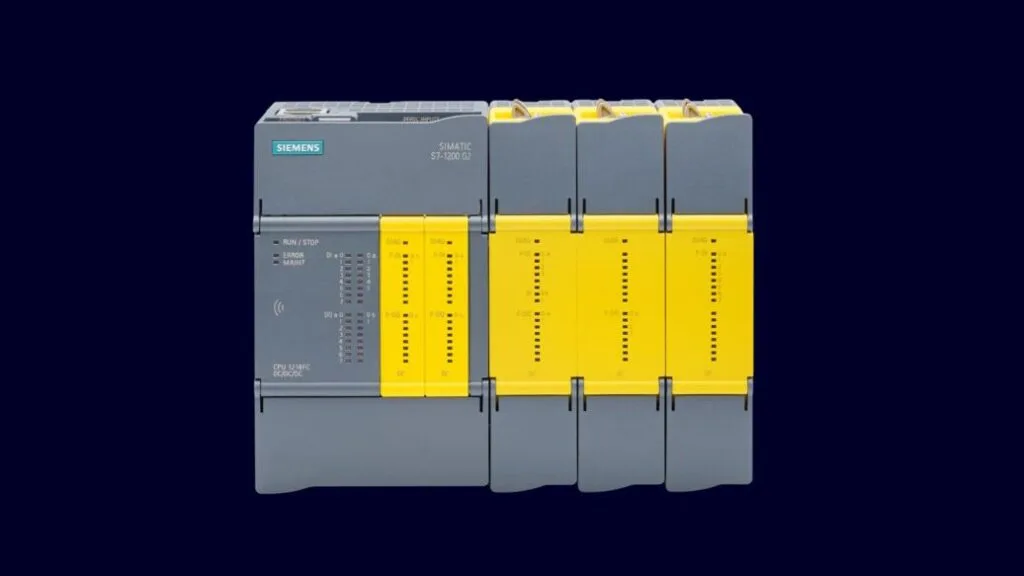
The S7-1200F series provides cost-effective safety solutions for smaller machines and applications. These compact controllers integrate standard automation and safety functions in a single unit, making them ideal for distributed control architectures and standalone machine applications.
Key Features of S7-1200F Systems:
- Integrated safety functions up to SIL 3 and PLe certification
- Support for up to 16 fail-safe digital inputs and 8 fail-safe digital outputs
- Built-in PROFIsafe communication capabilities
- Compact design suitable for space-constrained applications
The S7-1200F series supports common safety functions including emergency stop monitoring, safety door interlocking, two-hand operation, and safe speed monitoring. These pre-certified safety functions significantly reduce engineering time and ensure compliance with international standards.
S7-1500F Series - Advanced Safety Performance
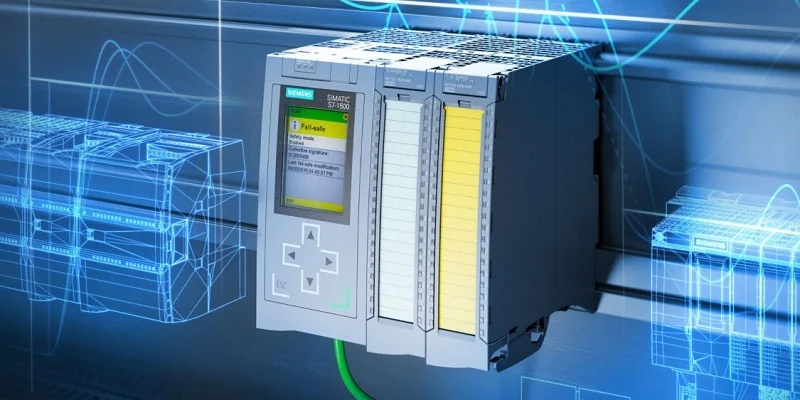
The S7-1500F series represents Siemens' flagship safety PLC platform, designed for complex industrial applications requiring high performance and extensive safety functionality. These controllers provide advanced processing capabilities while maintaining the integrated safety approach that characterizes Siemens' safety philosophy.
Advanced Capabilities of S7-1500F Systems:
- High-speed processing with deterministic response times for critical safety applications
- Extensive I/O capacity supporting large distributed safety systems
- Advanced diagnostic capabilities with plain-text safety messages
- Multi-level password protection for safety program security
The S7-1500F series incorporates proven coded processing technology, which provides maximum integration of standard and fail-safe automation while ensuring the highest levels of safety integrity [28].
TIA Portal Safety Programming Environment
The Totally Integrated Automation (TIA) Portal serves as the unified engineering platform for both standard automation and safety programming. This integrated approach significantly reduces the learning curve for engineers and simplifies the development of safety applications.
Safety Programming Methodology
Safety programming in TIA Portal follows established best practices that ensure reliable and maintainable safety applications. The programming environment provides certified safety function blocks that have been pre-tested and validated according to international standards.

Recommended Programming Practices:
- Modular Programming Structure: Safety applications should be organized into logical modules that correspond to specific safety functions, making the program easier to understand and maintain.
- Operating Mode Management: Safety functions should be structured to handle different operating modes, with emergency stop functions active in all modes and other safety functions activated based on current operational requirements.
- Diagnostic Integration: Comprehensive diagnostic information should be integrated into the safety program to facilitate rapid fault identification and resolution.
Safety Function Library
TIA Portal includes a comprehensive library of pre-certified safety functions that cover the most common industrial safety applications. These function blocks have undergone rigorous testing and certification processes, ensuring compliance with international standards while reducing development time.
Common safety functions available in the library include emergency stop processing, safety door monitoring, two-hand operation control, light curtain evaluation, and safe motion monitoring. Each function block includes detailed documentation and configuration parameters that allow customization for specific application requirements.
PROFIsafe Communication Protocol
PROFIsafe represents a crucial component of Siemens' integrated safety architecture, providing secure communication of safety-related data over standard PROFIBUS and PROFINET networks. This protocol ensures that safety information maintains its integrity during transmission while allowing integration with standard automation data.
Protocol Architecture and Security Features
PROFIsafe implements multiple layers of protection to ensure safe communication of critical data. The protocol includes comprehensive error detection mechanisms, sequence monitoring, and timeout supervision to prevent corruption or loss of safety-related information.
Key Security Features:
- Cryptographic data protection with unique safety telegrams
- Sequence number monitoring to detect message loss or duplication
- Timeout supervision to ensure timely delivery of safety information
- Comprehensive error detection and recovery mechanisms
The protocol supports various safety device types, including safety sensors, actuators, and distributed I/O systems, enabling flexible system architectures while maintaining safety integrity.
Implementation Best Practices and Guidelines
Successful implementation of Siemens safety systems requires adherence to established best practices and systematic approaches to safety system design and deployment.
Safety Lifecycle Management
The safety lifecycle approach, as defined by IEC 61511, provides a structured framework for managing safety systems throughout their operational life. This comprehensive approach ensures that safety considerations are integrated into every phase of system development and operation.
Key Lifecycle Phases:
Concept and Hazard Assessment: Initial identification of safety requirements and risk evaluation to determine appropriate safety measures.
Design and Development: Implementation of safety functions based on identified requirements, including hardware selection and software development.
Installation and Commissioning: Physical installation and testing of safety systems to verify proper operation and compliance with specifications.
Operation and Maintenance: Ongoing monitoring and maintenance to ensure continued safety performance throughout the system's operational life.
Risk Assessment Methodology
Comprehensive risk assessment forms the foundation of effective safety system design [5][6]. The assessment process must identify all potential hazards, evaluate their severity and frequency, and determine appropriate risk reduction measures.
Risk Assessment Steps:
- Hazard Identification: Systematic identification of all potential sources of harm within the system or process
- Risk Evaluation: Assessment of hazard severity and exposure frequency to determine overall risk levels
- Risk Reduction: Implementation of appropriate safeguards to reduce risks to acceptable levels
- Validation: Verification that implemented measures effectively reduce identified risks
Certification and Compliance Documentation
Siemens maintains comprehensive certification documentation for all safety-related products, ensuring transparency and regulatory compliance. This documentation provides users with the necessary information to demonstrate compliance with applicable safety standards and regulations.
Third-Party Certifications
Siemens safety systems undergo rigorous third-party assessment and certification by recognized bodies such as TÜV Süd, TÜV Rheinland, and other accredited organizations. These certifications provide independent verification of safety system performance and compliance with international standards.
The certification process includes comprehensive evaluation of development processes, hardware design, software implementation, and system integration. This thorough assessment ensures that Siemens safety systems meet the highest standards for functional safety and reliability.
Functional Safety Management
Siemens has implemented comprehensive Functional Safety Management (FSM) processes that govern the development, testing, and validation of all safety-related products [30]. These processes ensure systematic fault avoidance and provide the organizational framework necessary for achieving high levels of safety integrity.
The FSM framework includes detailed procedures for safety requirement specification, design verification, validation testing, and change management. This systematic approach ensures that safety considerations are properly addressed throughout the product development lifecycle.
Future Trends and Technological Developments
The field of machine safety continues to evolve with advancing technology and changing regulatory requirements. Siemens remains at the forefront of these developments, continuously improving its safety offerings to meet emerging industry needs.
Integration with Industrial IoT and Industry 4.0
The integration of safety systems with Industrial Internet of Things (IoT) and Industry 4.0 technologies presents both opportunities and challenges for machine safety. Siemens is developing solutions that maintain safety integrity while enabling advanced connectivity and data analytics capabilities.
Security considerations become increasingly important as safety systems become more connected. Siemens implements comprehensive cybersecurity measures to protect safety-critical systems from potential threats while enabling beneficial connectivity features.
Conclusion
Siemens SIMATIC Safety Integrated technology represents a comprehensive solution for modern machine safety requirements, combining advanced technical capabilities with rigorous compliance to international standards. The integrated approach eliminates traditional boundaries between safety and automation systems, resulting in more efficient, reliable, and cost-effective solutions.
For industrial automation professionals and system integrators, understanding the capabilities and proper implementation of Siemens safety systems is essential for developing safe, compliant, and efficient automation solutions. The combination of proven technology, comprehensive certification, and integrated engineering tools makes Siemens safety systems an excellent choice for a wide range of industrial applications.
The ongoing evolution of safety standards and technology ensures that machine safety will continue to be a critical consideration in industrial automation. Siemens' commitment to innovation and compliance positions the company well to meet these evolving challenges while maintaining the highest standards for personnel protection and system reliability.


